A Wicking Bed is a super efficient, water-saving, garden bed. They can save up to 90% of the water otherwise used in plain garden beds. They are usually installed as above ground raised beds, either stand alone, or in linked multiple bed networks.
The diagram below shows the way a traditional wicking bed works.

The key parts:
- a supported water proof liner that contains all the water, fittings, soil and plants.
- a pipe section to bring water to the bottom, and an overflow / drain section
- a course sand, scoria rock or gravel section around the water pipes to make a water storage area ( the more open the material the more water it can hold - and choose salt free materials )
- a geotextile sheet to separate the water section from the soil and plants ( this is an open weave fabric that will not rot or tear, but will let water vapour through )
- a soil section ( a mix to suit the plants. local conditions, and growing season )
A wicking bed works by letting water vapour ( water as a gas ) work it’s way up through the soil to the plant roots. The soil is not flooded with water, so the plants can take in as much or as little water as they need for maximun growth and plant health. Most wicking beds have a clear stand pipe so you can see how much water is still in the water section, making it easy to manage your garden.
We currently offer one complete wicking bed solutions - Biofilta Foodcube is a modula one piece system that can be linked ( and made transportable ) - www.foodcube.com.au
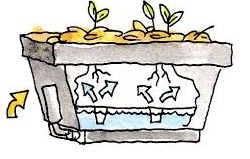
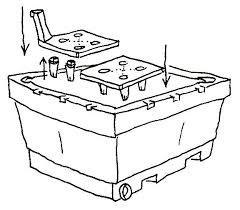
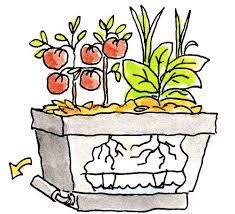
This is a much simpler system - the soil sits on perforated plates above a water reservoir. Some of the soil goes down into the water via cones, but most of the water comes up as water vapour from the air gap. This also aerates the soil and encourages healthy fungus, bacteria and bugs.
Download a FoodCube construction and use guide HERE